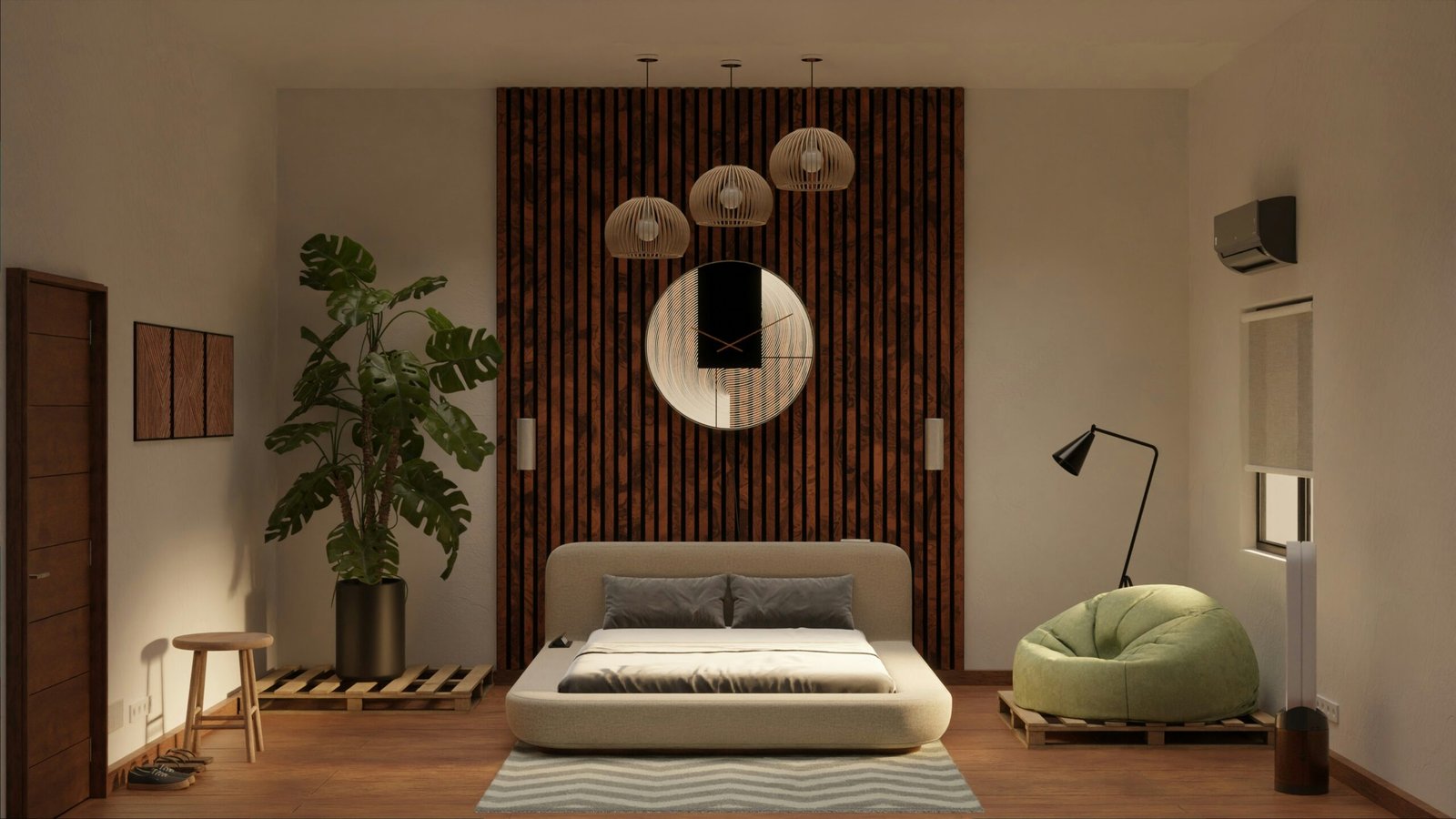
Most of us are mentally living in chaos: a desktop full of 78 open tabs, a brain powered by iced coffee and anxiety, and a bedroom that’s one Amazon package away from being a storage unit. If you’ve ever stared at your space and thought, “I need a vibe reset,” let me introduce you to your new interior design bestie: Japandi.
Japandi (Japan + Scandinavia = Japandi) is the design equivalent of deep breathing. It’s clean, calm, cozy, and minimal without feeling empty.
1. Functionality is the New Flex
Japandi is minimalism, but with a soul. That means nothing is in your space just to look cute. Everything has a purpose — and ideally, more than one.
How to do it:
Choose furniture and decor that actually work for your life. For example:
- A bench by the bed that doubles as storage
- A sleek shelf that hides your Wi-Fi router and your random charging cords
- A neutral ceramic bowl that looks artsy but also holds your keys and sunglasses
This is where you Marie Kondo your stuff. Ask: Do I use this? Do I need it? Does it make my apartment feel like a yoga retreat instead of a college dorm?
2. Neutrals, But Make Them Warm
No, Japandi doesn’t mean “everything beige and dead.” It means working with natural, grounded colors — warm whites, soft taupes, earthy greys, deep greens, and dusty blacks.
How to do it:
Start with a neutral base (walls, larger furniture) and add layered tones through:
- Linen or cotton throws
- Textured area rugs
- Clay vases or dark wood trays
Japandi is all about calming tones that don’t scream for attention. The vibe should be: I light a candle and feel like I pay my bills on time.
3. Texture Over Tren
Japandi design skips the fast fashion of home decor. Instead of chasing whatever’s viral on TikTok this week, it focuses on timeless, tactile materials — think natural wood, soft stone, matte ceramics, linen, bamboo, and leather.
How to do it:
- Swap your plastic bins for woven baskets
- Replace that glossy IKEA coffee table with one in natural wood or even reclaimed material
- Add a soft linen curtain or slubby pillowcase to introduce quiet visual depth
Mix textures to keep things interesting — you want your space to whisper “expensive” without actually draining your account.
4. Declutter Like You Mean It
This part hurts, but it’s necessary. Japandi hates clutter. That pile of unopened mail on your desk? The dusty fake plant that’s slowly collapsing in the corner? The basket of “stuff you’ll deal with later”? It’s all got to go.
How to do it:
Set a timer for 20 minutes and do a “visual detox.” Start with one room. Anything that doesn’t serve your space or bring you peace goes.
- Store it
- Donate it
- Or finally let it go
5. Nature Belongs Inside Too
Japandi design is rooted in biophilic design — basically a fancy way to say “plants and natural elements make us less sad.” A little green goes a long way in softening minimal spaces.
How to do it:
- Add one or two low-maintenance plants like a snake plant, ZZ plant, or a small rubber tree
- Incorporate wooden decor or pebble trays
- Use light-filtering curtains to bring in soft, diffused natural light
It’s about balance. A little plant life, a little wood, and suddenly your apartment looks like you own an air purifier and read mindfulness books on purpose.
Final Thoughts
Japandi isn’t about perfection. It’s about calm. It’s about having a space that supports you — not one that overwhelms you with clutter, bad lighting, or vibes you picked from five different TikTok trends.
It’s peaceful, purposeful, and grown-up in the best possible way.
So if you’re ready to graduate from chaos to calm — from random decor decisions to a home that actually feels like home — Japandi might just be your new thing.
You might also like:
The Psychology of Cozy: Why Your Room Might Be Making You Stressed
Leave a Reply